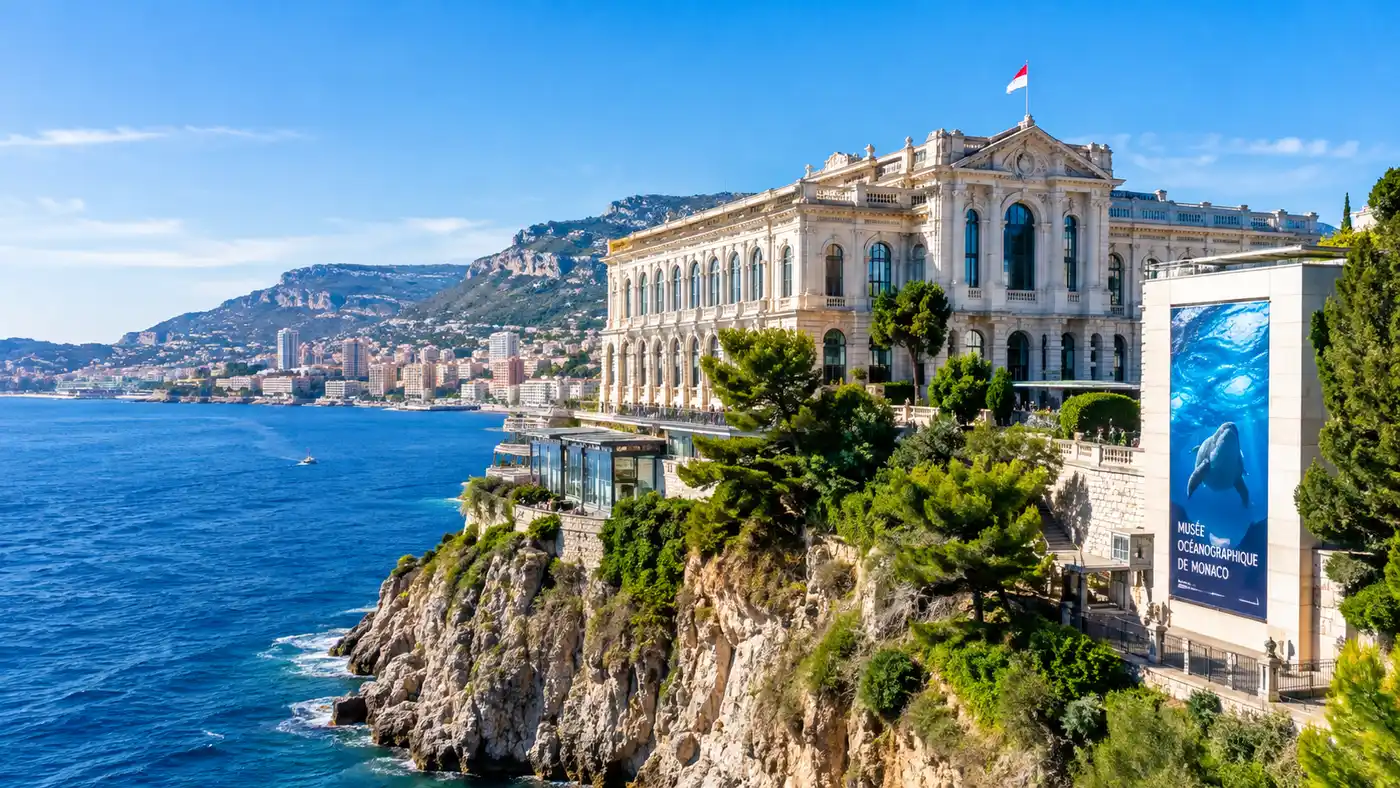
History and Famous Directors of the Oceanographic Museum of Monaco
You can see the building from a boat miles out at sea before you even spot the Prince's Palace. It clings to the sheer limestone face of the Rock of Monaco like a barnacle made of carved stone, dropping straight down into the Mediterranean. Most visitors walk past the white columns without realizing that the post of oceanographic museum of monaco director has spent over a century acting as part research chair, part state diplomacy role, and part theatrical producer. It is an unusual job for an unusual building.
The place exists because one wealthy prince obsessed over deep-sea trawling nets and whale anatomy. Over the decades, the men steering it turned a dusty Edwardian research base into a household name for global ocean activism. If you want to understand why this cliffside fortress looks the way it does, you have to look at the people who were handed the keys.
Book your oceanographic museum of monaco experience:
The Prince's Obsession: Oceanographic Museum of Monaco Founded 1889 Opened 1910
Prince Albert I spent roughly thirty years cruising the North Atlantic on his private yachts, netting bizarre creatures from abyssal depths. He brought along artists, chemists, and cartographers. By the late 1880s, his private apartments in Monaco were practically overflowing with jars of formaldehyde, dried coral specimens, and pickled deep-sea fish. He needed somewhere permanent to store his finds. That impulse sparked the initial planning stages.
While the oceanographic museum of monaco founded 1889 opened 1910 official timeline sounds straightforward on paper, the physical construction took eleven grinding years. Workers cut blocks of white limestone from quarries at La Turbie up on the mountain ridge above the principality. Lowering those stones down a vertical cliff face required building elaborate scaffolding rigs anchored right into the coastal rock. Sea spray soaked the lower tiers while masons cut intricate octopus and sea star carvings into the upper exterior walls.
When the doors opened in March 1910, Albert gave an emotional speech about building a temple to marine science. He had sunk a massive portion of the Grimaldi family wealth into it. The oceanographic museum of monaco founded 1889 opened 1910 milestone cemented Monaco as something far more serious than just a roulette wheel playground for bored aristocrats.
Note: The museum basement still sits directly against the original sea cliff rock. If you visit on a day with heavy swells, you can hear the waves thudding against the lower foundations near the filtration pumps.
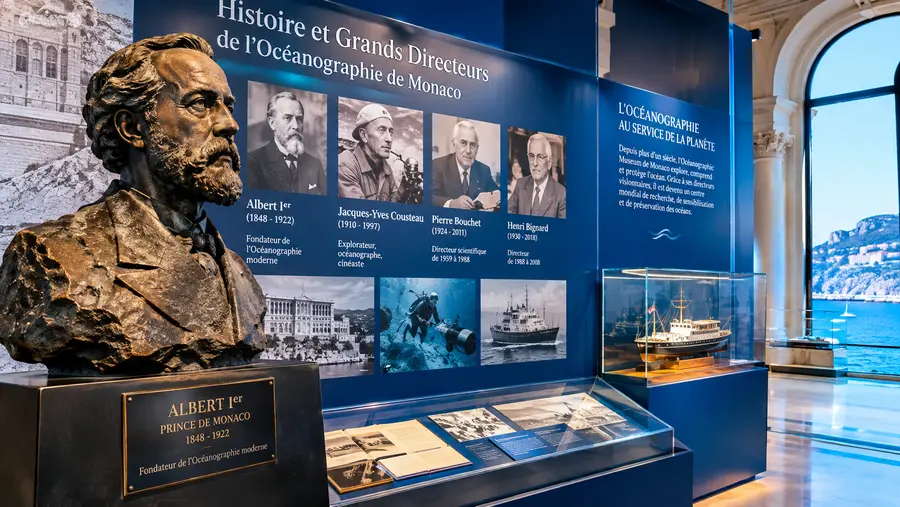
Jules Richard: The Quiet Pioneer and First Oceanographic Museum of Monaco Director
Albert provided the money and the royal title, but Jules Richard did the actual heavy lifting. Richard was a quiet, relentless French scientist who first accompanied the Prince on an expedition aboard the yacht Princesse Alice back in 1893. He became the very first oceanographic museum of monaco director, holding the post from opening day in 1910 until he died in 1945.
Think about that span. Richard ran the institution across thirty-five years, steering it through two world wars. While Albert was away handling royal obligations or attending pacifist conferences in Europe, Richard stood in the cold laboratories cataloging plankton, calibrating brass oceanographic instruments, and arranging display cases. He was meticulous to an obsessive degree. Visitors in the 1920s recalled seeing him walk the grand halls in a dark frock coat, dusting glass bell jars himself if the cleaning staff missed a spot.
His tenure set the standard for what every subsequent oceanographic museum of monaco former director had to balance. Richard had to run a world-class laboratory for visiting biologists while keeping public exhibition halls attractive enough to justify the tickets. He managed both on a shoestring budget during the interwar years when money was tight across the border in France.
Jacques Cousteau: The Golden Age of an Oceanographic Museum of Monaco Former Director
If Jules Richard built the museum's scientific bones, Jacques-Yves Cousteau made it famous worldwide. Prince Rainier III appointed Cousteau as the oceanographic museum of monaco director in 1957. It was an inspired gamble. At the time, Cousteau was already gaining international fame for inventing the Aqua-Lung with Émile Gagnan and winning the Palme d'Or for his documentary film The Silent World.
Cousteau did not care much for sitting at an antique mahogany desk in Monaco. He frequently parked his converted minesweeper research vessel, the Calypso, down at Port Hercule, taking off for months to film in the Red Sea or off the coast of Madagascar. Yet, as an oceanographic museum of monaco former director, his thirty-one-year run transformed the museum completely.
He brought the public into direct contact with real ocean exploration. Cousteau hauled his yellow diving saucers into the museum halls, set up experimental aquarium tanks, and used the institution as a megaphone to shout about Mediterranean pollution long before green politics became fashionable. He famously fought off plans by French nuclear authorities to dump radioactive waste into the Mediterranean in 1960, organizing blockades on French railway lines and leveraging his Monaco post to embarrass government ministers.
Pro tip: Head to the basement aquarium area early around 10:00 AM. You can inspect the vintage deep-sea diving gear and Cousteau-era brass atmospheric suits without crowds elbowing you for photos.
Cousteau retired from the position in 1988 after spending more than three decades reshaping how the world thought about the deep ocean. His presence still hangs over the halls. You will see old expedition photos, scale models of the Calypso, and his personal diving sub scattered around the exhibits.
Book your oceanographic museum of monaco experience:
Modern Leadership: Oceanographic Museum of Monaco Former Directors and Current Vision
Stepping into Cousteau's shoes was nearly impossible. The board selected François Doumenge, an energetic marine geographer who served from 1988 until 2001. Doumenge shifted the focus back toward international fisheries management, coral reef ecology, and sustainable island development. He had worked extensively across the Pacific, and he brought that tropical expertise directly into the aquarium tanks.
Following Doumenge, other oceanographic museum of monaco former directors continued steering the site through a modern conservation era. The institution evolved from a classic cabinet of curiosities into an active advocacy hub, working under the overarching umbrella of the Oceanographic Institute, Prince Albert I Foundation.
| Leader | Tenure | Primary Background | Key Legacy at the Museum |
|---|---|---|---|
| Jules Richard | 1910 - 1945 | Marine Biologist & Expedition Scientist | Organized original collections; survived two world wars |
| Jacques-Yves Cousteau | 1957 - 1988 | Naval Officer & Filmmaker | Global TV exposure, anti-pollution campaigns, Calypso missions |
| François Doumenge | 1988 - 2001 | Marine Geographer | Living coral culture programs; global island conservation focus |
| Robert Calcagno | 2009 - Present | Executive & Environmental Strategist | Turtle rescue sanctuary, interactive digital displays, major renovations |
Robert Calcagno took the reins as CEO and director of the Oceanographic Institute in 2009. His background brought fresh marketing ideas and sharp environmental focus, which was needed because century-old museums get tired quickly if left untouched. Calcagno oversaw the construction of the outdoor Mediterranean sea turtle rescue center, an open-air rehabilitation basin on the cliff terrace. He also introduced temporary contemporary art installations, pairing historic skeleton rooms with work by artists like Damien Hirst and Huang Yong Ping.
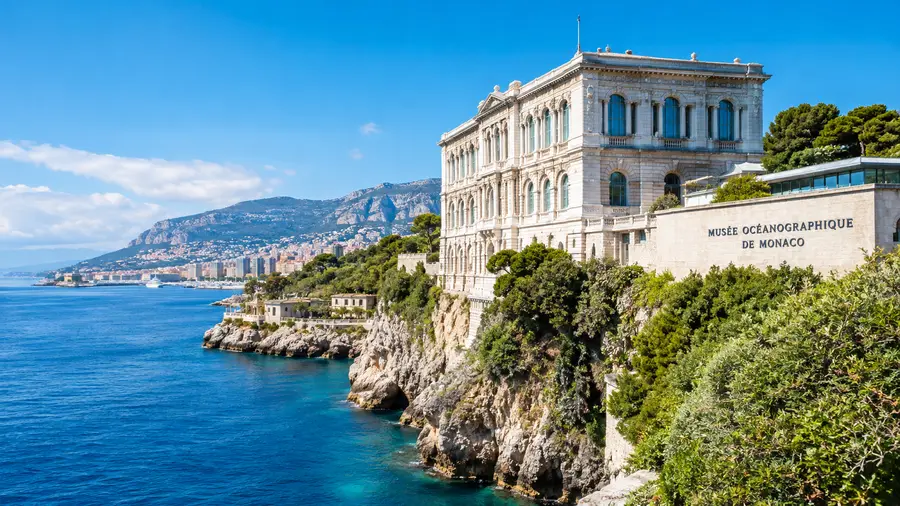
Planning Your Visit to Walk the Directors' Footsteps
Visiting this place takes planning if you want to avoid standing behind large school groups in narrow hallways. It sits atop the Rock of Monaco, right near Saint Nicholas Cathedral and the government ministries. You can easily spend three hours here if you actually read the historical placards.
Before you climb the rock, check out our guide on ticket prices and admission details to buy passes ahead of time, which saves you waiting in the ticket line at the entrance hall. If you want to dive straight into the living displays downstairs, browse our complete Monaco aquarium guide to see feeding schedules and tank layouts.
When you walk through the museum today, keep an eye out for these specific historic sections:
- The Albert I Whale Hall: home to an enormous suspended fin whale skeleton collected during an Arctic voyage, surrounded by vintage timber display cases.
- The historic Cabinet of Curiosities: an evocative room featuring jars of pickled deep-sea squids, original logbooks, and copper diving helmets from the 1890s.
- The Monaco Sea Turtle Odyssey: the modern outdoor recovery pool on the cliff edge where injured turtles recuperate before release back into the wild.
- The Cousteau Memorial corners: quiet wall cases scattered across the main levels displaying brass compasses, depth meters, and diving log entries handwritten by the Calypso crew.
Honest advice: do not skip the rooftop terrace. It costs nothing extra once you are inside. You can look straight down at the cobalt water breaking against the rocks below, or look east toward the Italian coastline. Up there, sitting at the small cafe with an espresso that costs around 4 euros, you realize why Albert built the place right here. It was never meant to be hidden in a basement laboratory in Paris.
The building itself acts as an instrument. Even on sweltering July afternoons, the tall stone ceilings keep the second-floor gallery surprisingly cool, smelling faintly of old varnish, dried sea sponge, and aged oak floorboards.
If you love old maritime lore, set aside extra time for the top floor. That is where they keep the original ocean sounding reels and hand-cranked water samplers designed by Richard and Albert. Most tourists rush straight downstairs to watch the clownfish and reef sharks, meaning you will often have those quiet upper salons entirely to yourself.
Who was the most famous oceanographic museum of monaco director?
Jacques-Yves Cousteau was easily the most famous person to hold the post. He directed the museum for thirty-one years from 1957 to 1988, using the position to fund research expeditions aboard his ship Calypso and fight against industrial waste dumping in the Mediterranean.
When was the museum built and opened?
Prince Albert I initiated the foundation for the project in 1889, but construction on the cliffside of Monaco took over a decade. The museum officially opened its doors to the public in March 1910.
Who runs the museum today?
The museum operates under the Oceanographic Institute, Prince Albert I Foundation. Robert Calcagno has served as the head of the institution since 2009, managing both the Monaco facility and its sister headquarters in Paris.
Quick Reference
- Founded in 1889 by Prince Albert I
- Officially opened to the public in 1910
- Cousteau served as director for 31 years
- Built using white limestone from La Turbie
Book your oceanographic museum of monaco experience:
Worth the Walk Up the Rock
Monaco has plenty of flashy diversions, but this museum feels grounded in real human labor and sea salt. It was built by people who genuinely cared about what lived in the freezing dark beneath the waves. Take an afternoon, walk slowly through the Whale Hall, and tip your hat to Jules Richard, Cousteau, and the directors who kept this improbable cliffside vision afloat for over a hundred years.
Read more about oceanographic museum of monaco.